Corporate tax registration in the UAE is now a legal obligation for most businesses operating in Dubai and across the Emirates. However, many companies overlook an equally important compliance requirement: cancelling corporate tax registration when the business ceases operations or no longer meets taxable criteria.
Failing to cancel corporate tax properly can expose your company to serious legal consequences, penalties, and compliance risks.
In this guide, we explain the legal consequences of not cancelling corporate tax, the risks involved, and how businesses in Dubai can remain compliant with Federal Tax Authority (FTA) regulations.
Understanding Corporate Tax Deregistration in the UAE
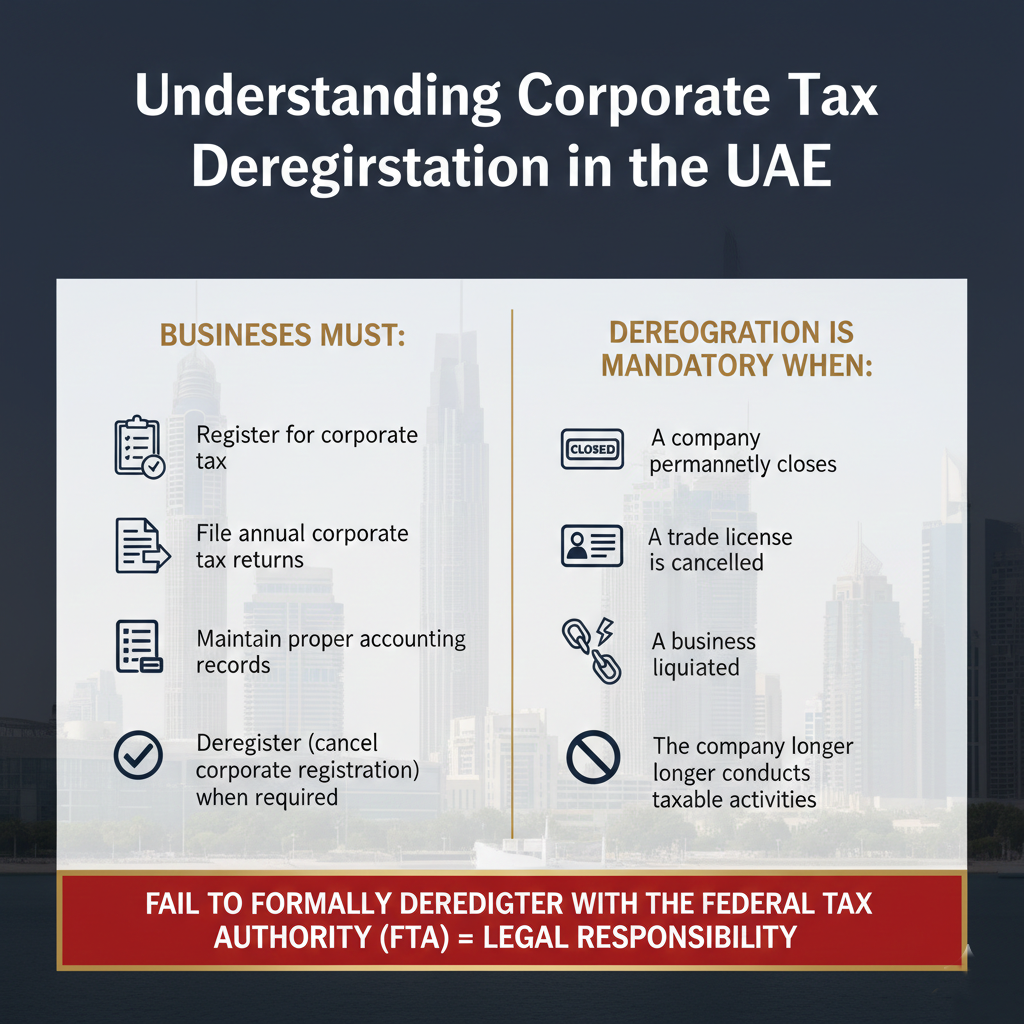
Under UAE Corporate Tax Law, businesses must:
- Register for corporate tax
- File annual corporate tax returns
- Maintain proper accounting records
- Deregister (cancel corporate tax registration) when required
Corporate tax deregistration is mandatory when:
- A company permanently closes
- A trade license is cancelled
- A business is liquidated
- The company no longer conducts taxable activities
If you fail to formally deregister with the Federal Tax Authority (FTA), your company remains legally responsible for compliance.
1. Administrative Penalties and Fines
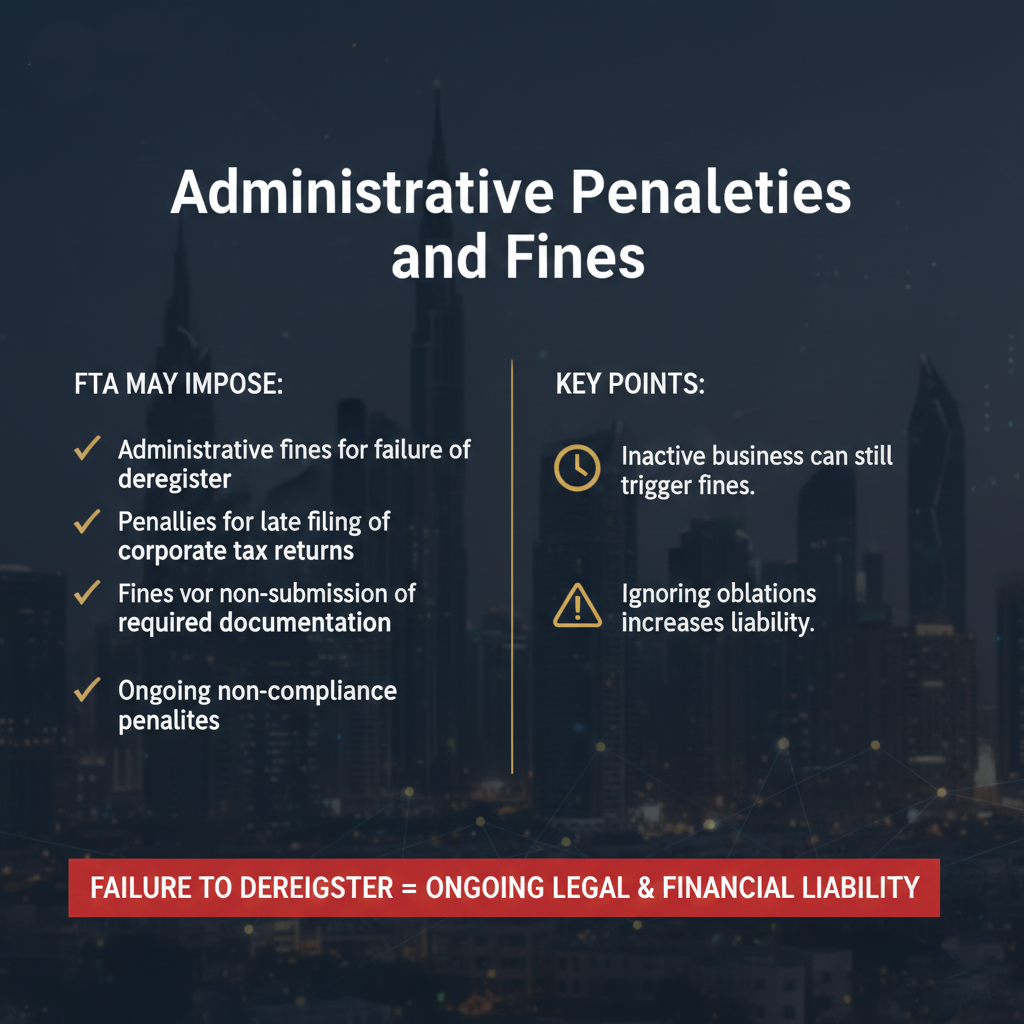
One of the most immediate legal consequences of not cancelling corporate tax is financial penalties.
The FTA may impose:
- Administrative fines for failure to deregister
- Penalties for late filing of corporate tax returns
- Fines for non-submission of required documentation
- Ongoing non-compliance penalties
Even if your business is inactive, the system may still expect filings. Failure to submit returns can trigger automatic fines.
Ignoring corporate tax obligations does not eliminate liability — it increases it.
2. Ongoing Corporate Tax Filing Obligations
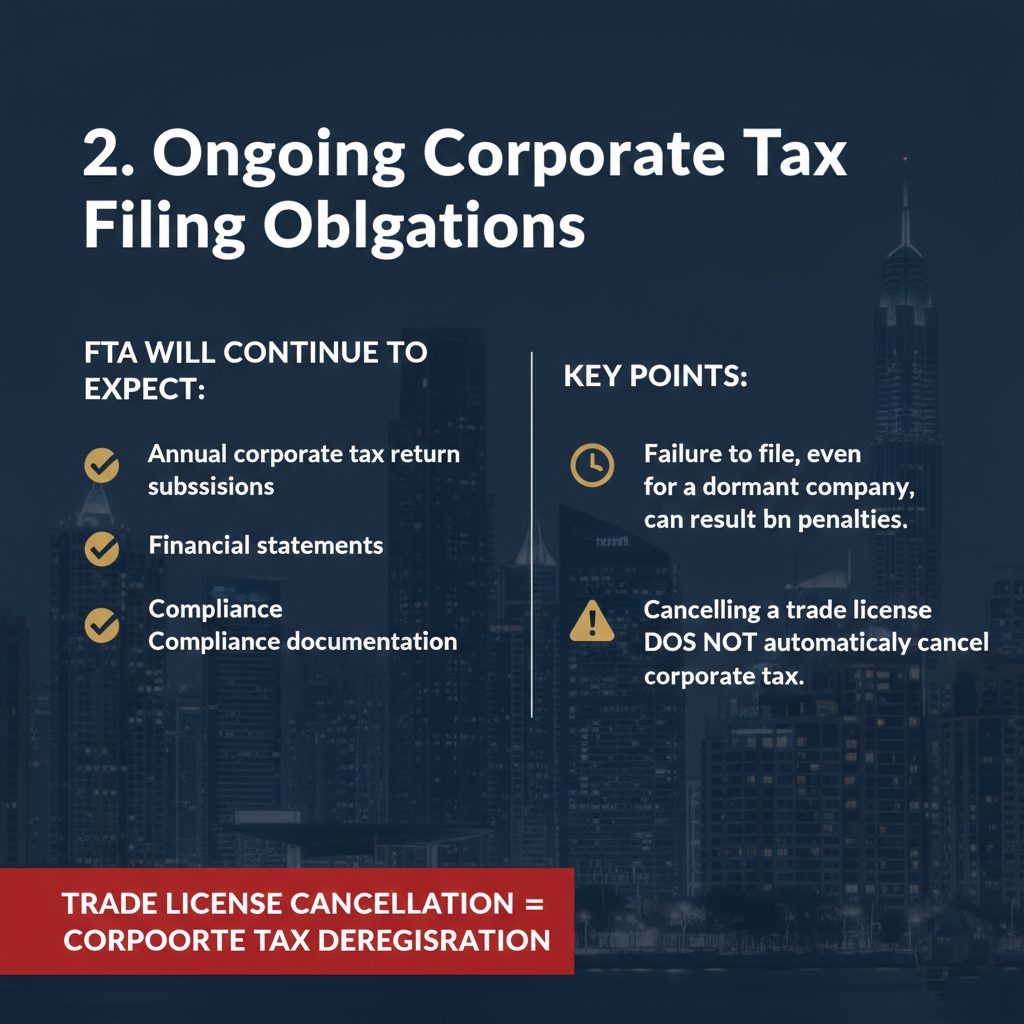
If you do not cancel your corporate tax registration, the FTA will continue to expect:
- Annual corporate tax return submissions
- Financial statements
- Compliance documentation
Failure to file returns, even for a dormant company, can result in penalties and legal action.
Many business owners assume that cancelling their trade license automatically cancels corporate tax. This is incorrect. Corporate tax deregistration requires a separate formal process.
3. Legal Liability for Directors and Shareholders
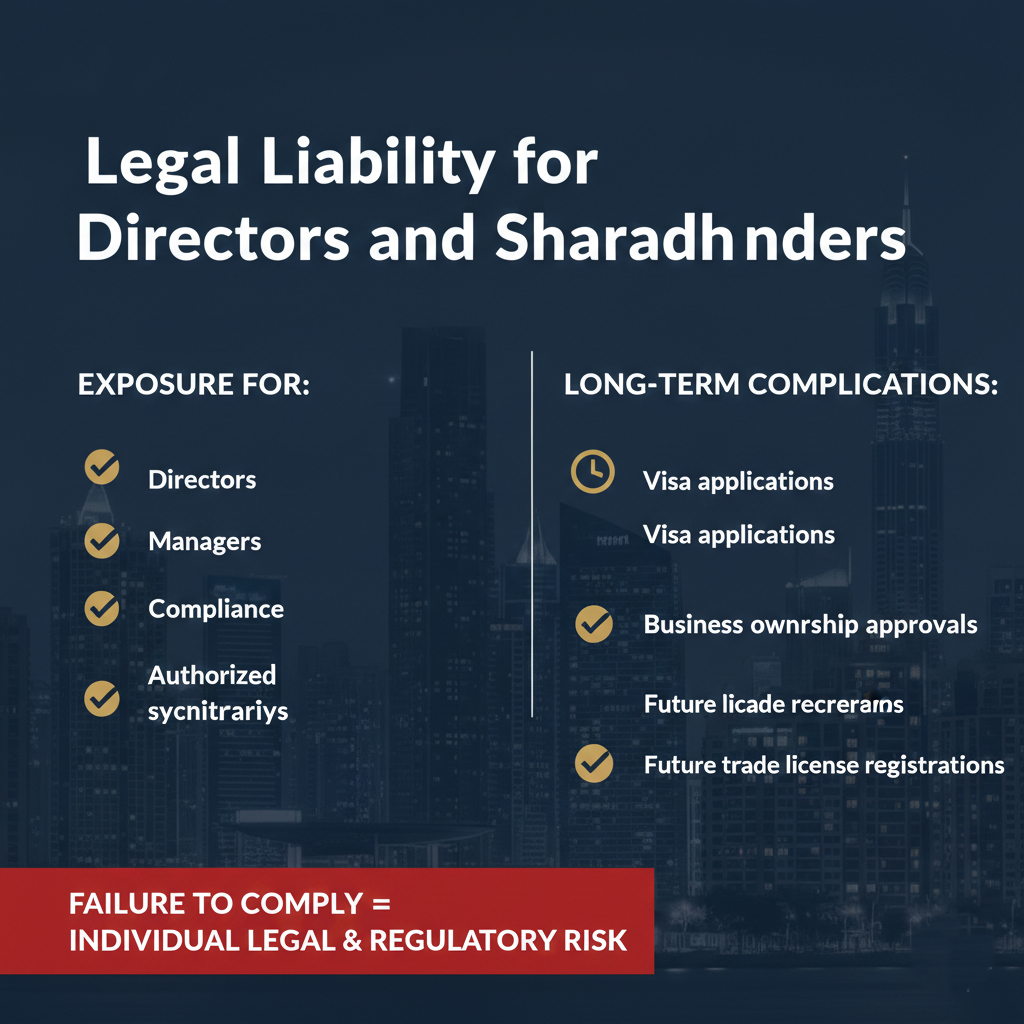
Under UAE corporate governance rules, directors and managers have compliance responsibilities.
Failure to cancel corporate tax registration may expose:
- Directors
- Managers
- Authorized signatories
to legal scrutiny or regulatory action.
In some cases, outstanding compliance issues can affect:
- Visa applications
- Business ownership approvals
- Future trade license registrations
This can create long-term complications for business owners in Dubai.
4. Delays in Company Liquidation
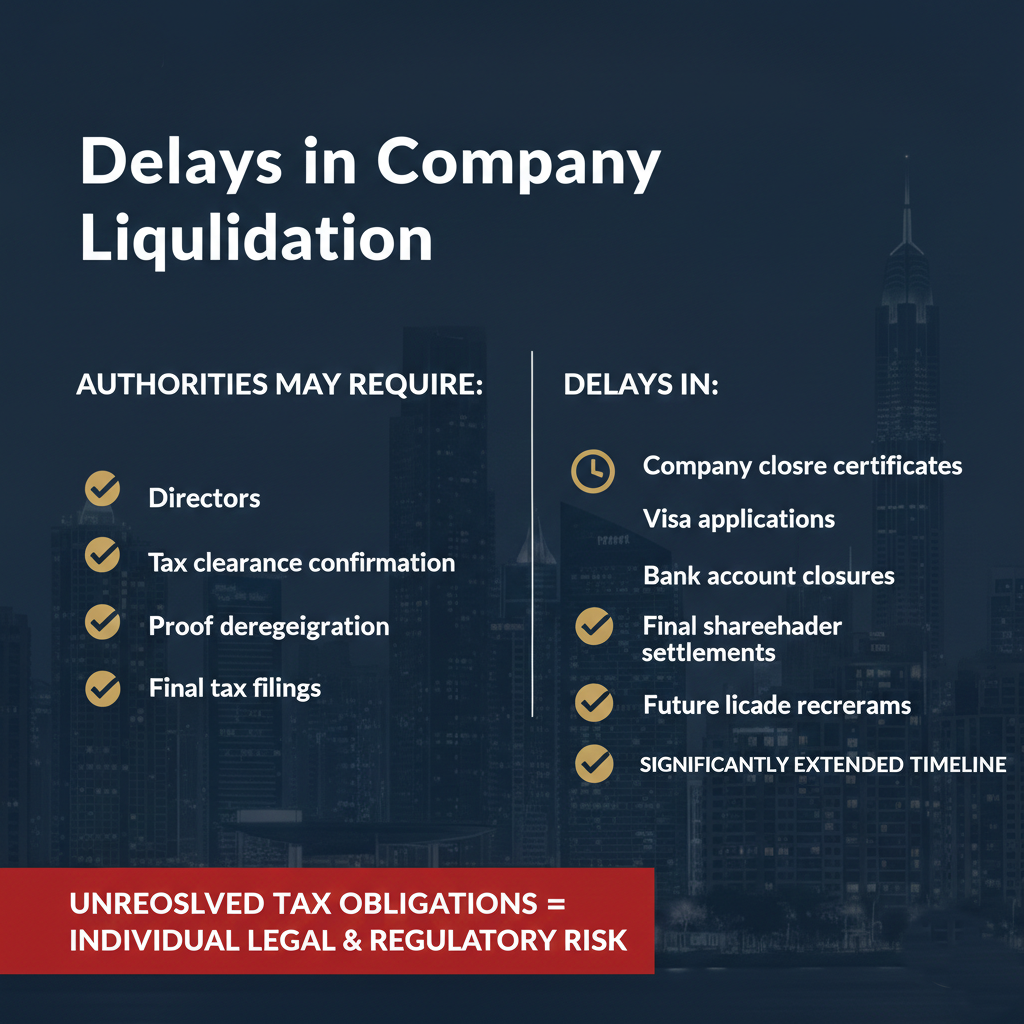
If you plan to liquidate your company in Dubai, unresolved corporate tax obligations can delay the liquidation process.
Authorities may require:
- Tax clearance confirmation
- Proof of deregistration
- Final tax filings
Without proper corporate tax cancellation, you may face delays in:
- Company closure certificates
- Bank account closures
- Final shareholder settlements
This can significantly extend the liquidation timeline.
5. Risk of Audits and Investigations
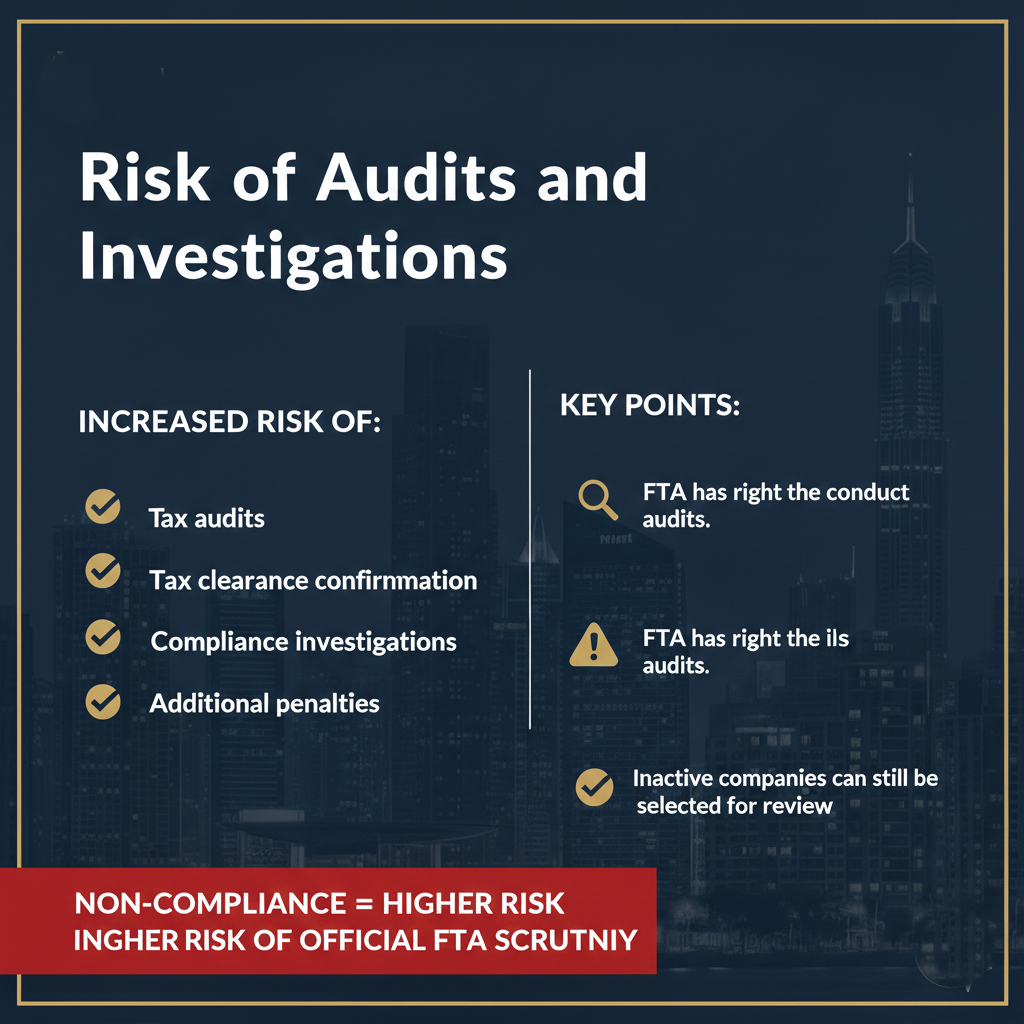
The Federal Tax Authority has the right to conduct audits on registered entities.
If your company remains registered but non-compliant, you increase the risk of:
- Tax audits
- Document verification requests
- Compliance investigations
- Additional penalties
Even inactive companies can be selected for review if they appear non-compliant in FTA records.
6. Accumulated Financial Exposure
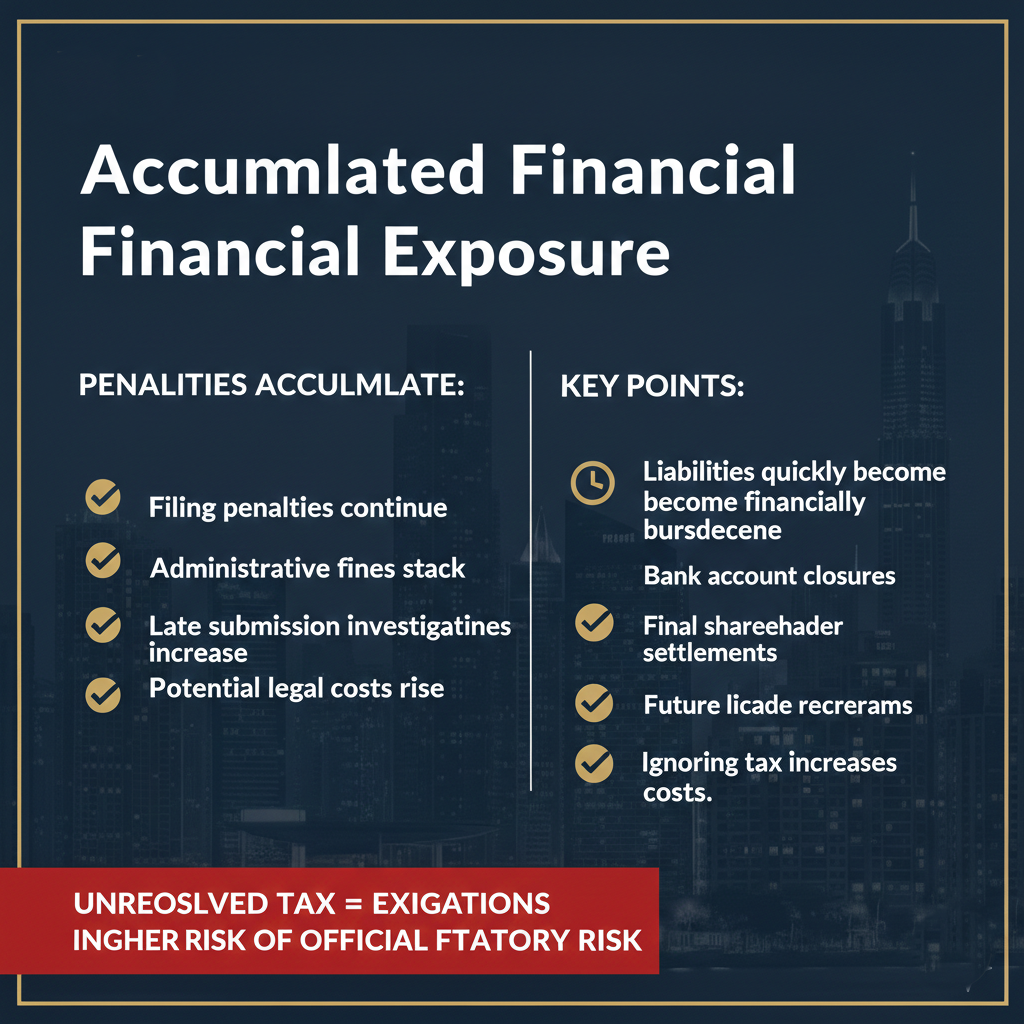
Many business owners underestimate how quickly penalties can accumulate.
When you fail to cancel corporate tax in the UAE:
- Filing penalties continue
- Administrative fines stack
- Late submission penalties increase
- Potential legal costs rise
Over time, these liabilities can become financially burdensome.
When Should You Cancel Corporate Tax in Dubai?
You should initiate corporate tax deregistration if:
- Your trade license has been cancelled
- Your company has ceased operations
- Your legal entity is liquidated
- You no longer conduct taxable activities
The deregistration process must be completed through the Federal Tax Authority portal, with supporting documentation.
How to Properly Cancel Corporate Tax Registration
To avoid legal consequences, businesses should:
- Ensure all corporate tax returns are filed.
- Clear any outstanding penalties or dues.
- Submit a corporate tax deregistration application.
- Provide required liquidation or trade license cancellation documents.
- Obtain official confirmation from the FTA.
Working with a qualified auditing and accounting firm in Dubai ensures that the process is handled correctly and without future risk.
Why Professional Corporate Tax Advice Matters
Corporate tax compliance in the UAE is new and evolving. Mistakes in deregistration can create unnecessary financial and legal exposure.
At Capital Closure, we help businesses in Dubai with:
- Corporate tax registration and deregistration
- Corporate tax return filing
- Tax compliance advisory
- Company liquidation support
- Audit and accounting services
- FTA compliance management
Our goal is to protect your business from penalties and ensure full regulatory compliance.
Final Thoughts
Failing to cancel corporate tax registration in the UAE is not a minor administrative oversight — it carries real legal and financial consequences.
If your business has stopped operating or is preparing for liquidation, act promptly.
Proper corporate tax deregistration protects:
- Your company
- Your directors
- Your financial position
- Your future business activities
Need assistance with corporate tax deregistration in Dubai? Visit: https://capitalclosure.ae/
Contact our team today for expert guidance and compliance support.