Liquidating a company in Dubai does not automatically eliminate your legal exposure. Many business owners assume that once a trade license is cancelled and operations stop, their responsibility ends. In reality, future liability after liquidation can arise if the closure process is not handled properly.
If you want to protect yourself from legal claims, financial penalties, or regulatory issues, you must follow a structured and compliant liquidation process.
In this guide, we explain how to protect yourself from future liability after liquidation in the UAE, and what steps business owners should take to avoid long-term risk.
Why Future Liability Happens After Liquidation
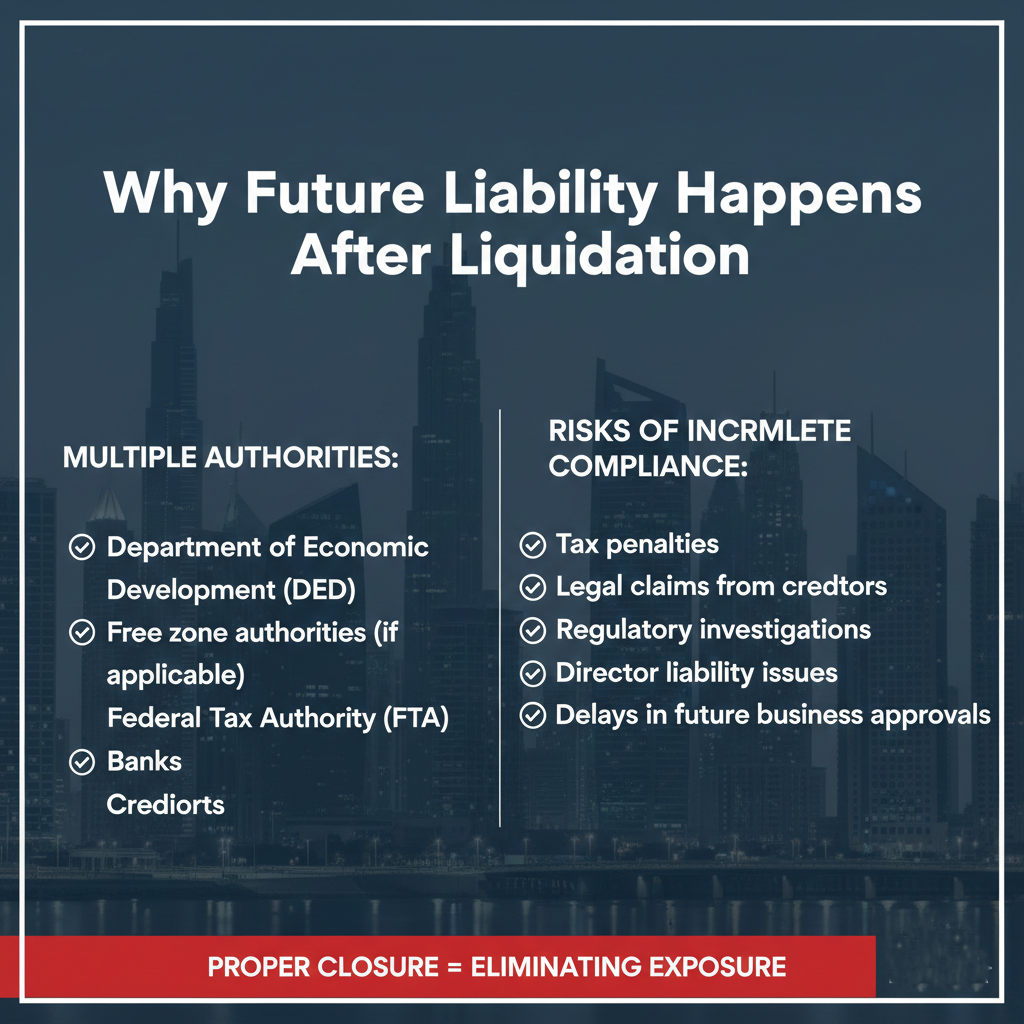
Company liquidation in Dubai involves multiple authorities, including:
- Department of Economic Development (DED)
- Free zone authorities (if applicable)
- Federal Tax Authority (FTA)
- Banks
- Creditors
If any compliance element remains incomplete, you may face:
- Tax penalties
- Legal claims from creditors
- Regulatory investigations
- Director liability issues
- Delays in future business approvals
Proper closure is not just about cancelling a trade license — it is about eliminating exposure.
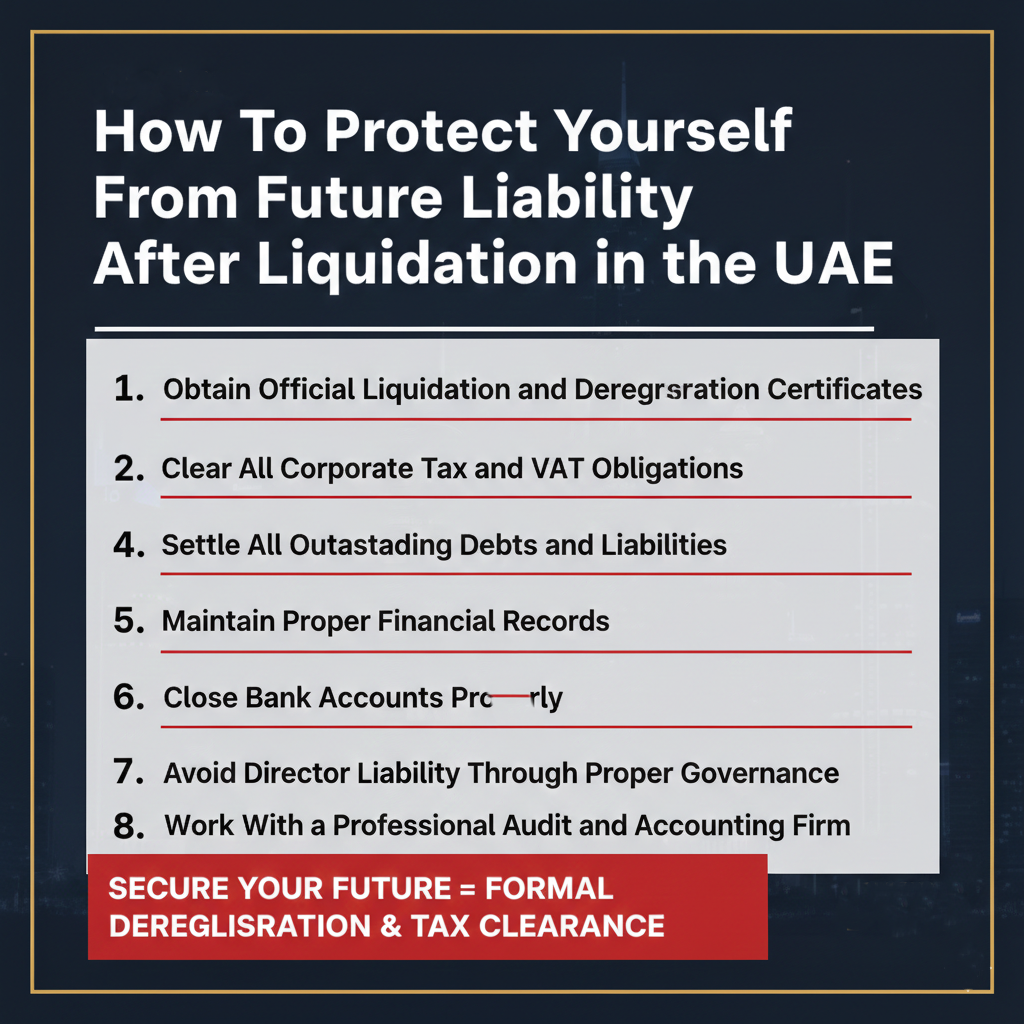
1. Obtain Official Liquidation and Deregistration Certificates
The most important step to avoid future liability is securing official confirmation of closure.
You must obtain:
- Trade license cancellation certificate
- Company liquidation certificate
- Corporate tax deregistration confirmation
- VAT deregistration (if applicable)
- Clearance from relevant authorities
Without formal documentation, your company may still appear active in government records.
2. Clear All Corporate Tax and VAT Obligations
Tax compliance remains one of the biggest post-liquidation risks in the UAE.
Before closing, ensure:
- All corporate tax returns are filed
- VAT returns are submitted (if registered)
- Outstanding penalties are cleared
- Corporate tax deregistration is completed through the FTA portal
- You receive official tax clearance confirmation
Failure to deregister properly can lead to ongoing tax penalties even after operations stop.
3. Settle All Outstanding Debts and Liabilities
Future liability often arises from unresolved financial obligations.
Before final liquidation:
- Pay suppliers and vendors
- Close bank loans and credit facilities
- Clear employee dues (including end-of-service benefits)
- Obtain written confirmation of settlements
- Resolve any pending legal disputes
Creditors can pursue claims against directors in cases of negligence or improper closure.
4. Maintain Proper Financial Records
Under UAE law, companies must maintain accounting records even after closure for a specified period.
Keep:
- Final audited financial statements
- Tax filings
- Settlement agreements
- Bank closure letters
- Shareholder resolutions
- Liquidator reports
Proper documentation protects directors and shareholders from future disputes.
5. Close Bank Accounts Properly
Leaving a corporate bank account open after liquidation can create compliance risks.
You should:
- Obtain official bank closure letters
- Ensure zero balance confirmation
- Cancel corporate cards and credit lines
- Terminate standing instructions
Banks may report dormant accounts, which can complicate future business activities.
6. Cancel Visas and Labor Contracts
If your company sponsors employees or shareholders under UAE visas, you must:
- Cancel all employment visas
- Cancel partner or investor visas
- Close labor files
- Obtain immigration clearance
Uncancelled visas can create legal exposure and immigration complications.
7. Avoid Director Liability Through Proper Governance
In some cases, directors can face personal liability if:
- The company was insolvent
- There was mismanagement
- Creditors were misled
- Tax compliance was ignored
To protect yourself:
- Work with licensed liquidators
- Obtain professional audit support
- Document shareholder decisions
- Ensure transparent communication with creditors
Professional guidance reduces legal exposure significantly.
8. Work With a Professional Audit and Accounting Firm
Improper liquidation increases risk.
A qualified auditing and accounting firm in Dubai can help you:
- Conduct final financial reviews
- File corporate tax deregistration correctly
- Ensure VAT compliance
- Prepare liquidation reports
- Obtain regulatory clearances
- Protect directors from future legal exposure
Professional oversight ensures full compliance with UAE corporate laws.
Common Mistakes That Create Future Liability
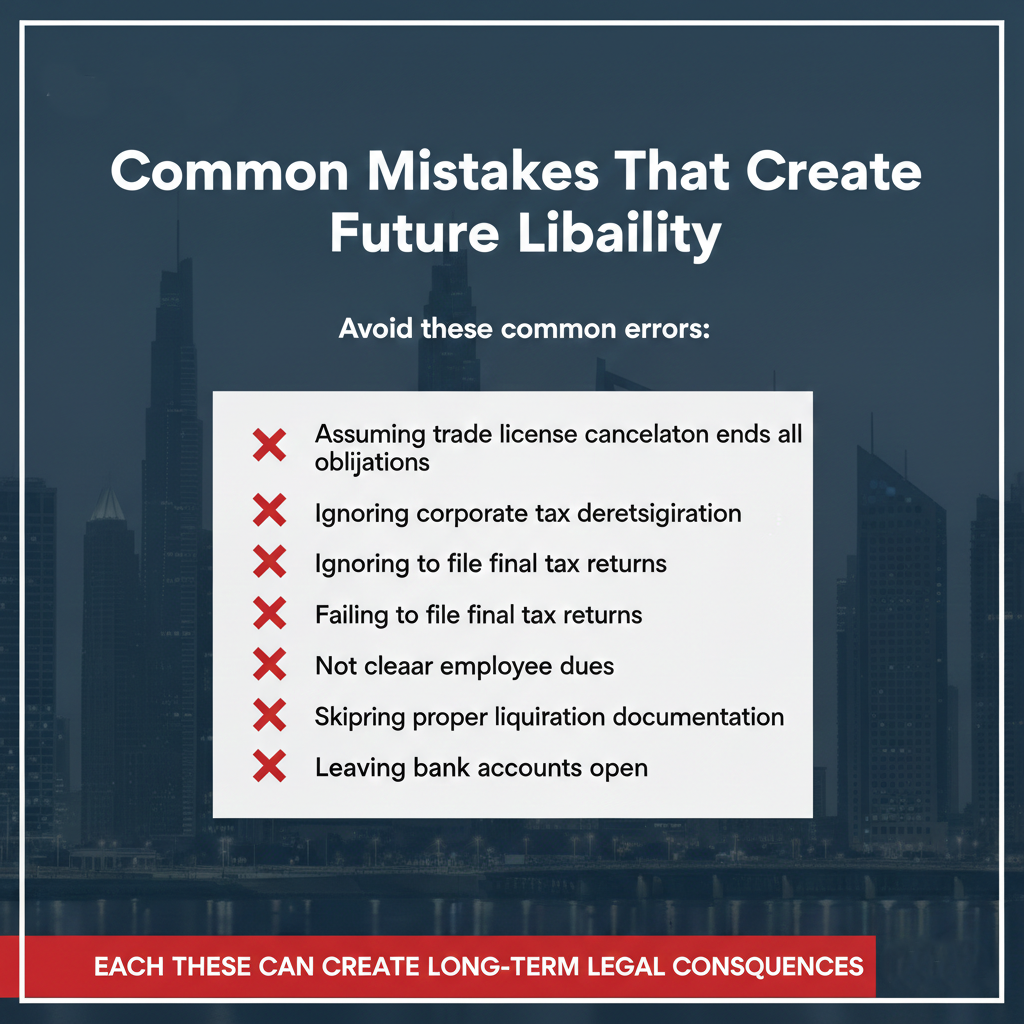
Avoid these common errors:
❌ Assuming trade license cancellation ends all obligations
❌ Ignoring corporate tax deregistration
❌ Failing to file final tax returns
❌ Not clearing employee dues
❌ Skipping proper liquidation documentation
❌ Leaving bank accounts open
Each of these can create long-term legal consequences.
Final Thoughts: Close Properly, Protect Permanently
Liquidation is not just the end of a business — it is a legal process that must be handled carefully.
If done correctly, you eliminate:
- Financial penalties
- Tax exposure
- Director liability
- Regulatory complications
- Future legal disputes
If done incorrectly, you may carry liability long after the company closes.
If you are planning company liquidation in Dubai and want to protect yourself from future liability, professional guidance is essential.
At Capital Closure, we provide:
- Company liquidation services in Dubai
- Corporate tax deregistration
- VAT deregistration
- Audit and compliance support
- Financial clearance and documentation
Visit: https://capitalclosure.ae/. Contact our team today to ensure your liquidation is legally secure and future-proof.